An honest comparison
Sometimes the lighter frame wins
We manufacture red iron, and this page will still tell you when a cold-formed or tube building is the better purchase. Five questions decide it.
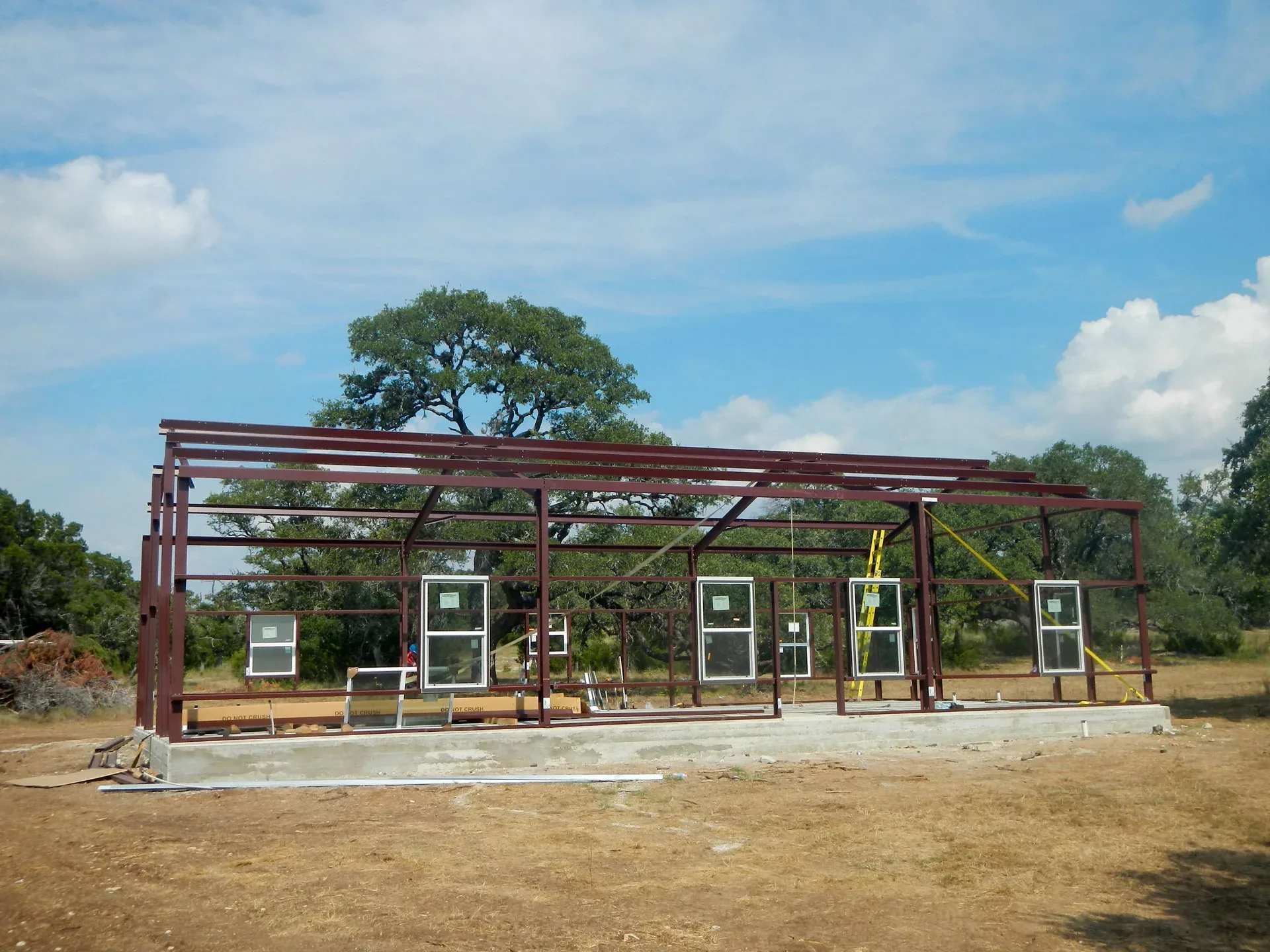
Which five questions decide the frame system?
Five questions decide the frame system: how wide the clear span runs, what hangs from the structure, how hard the site's loads push, what the contents are worth, and whether the building is really a cover rather than a building.
-
How wide does the clear span need to be?
Span is the first fork in the road. Light-gauge systems span short distances well and cheaply; as the clear width grows, their members deepen fast or interior columns appear.
Our answer Short span, light duty: the lighter system can be the better buy. Wide span with no columns is red iron's home ground, because members get built up to the width instead of selected from a range. -
Will the structure ever carry anything besides itself?
Hoists, mezzanines, liner panel, insulation, sprinklers, lighting: all of it is collateral load, and collateral load is a frame design input, not an afterthought.
Our answer If the honest answer is yes, even someday, the frame should be engineered for it now. Light systems can take specific engineered additions, but a structure meant to carry loads should start as one. -
How hard does the site push on the building?
Wind and snow are not opinions. A lightly loaded inland site forgives a light structure; a high-wind or heavy-snow site demands stiffness, bracing and connection capacity.
Our answer High-load sites favor the engineered rigid frame, which is designed to the site's own figures. Light-gauge structures in hard-load territory need substantially more bracing to keep up. -
What will the building protect?
The shell is often the cheapest thing on the property. The frame question is really a question about what stands inside it.
Our answer Storing a mower, a light frame is fine. Storing equipment, inventory or anything whose loss would hurt more than the building cost, buy the structure engineered with reserve. -
Is it actually a building, or a cover?
A carport, a hay cover, a shade structure over equipment: these are covers. Covers are a legitimate product with their own economics, and dressing one in a heavier frame helps nobody.
Our answer For an open cover, buy the tube structure and keep the difference. That is the correct engineering answer, not a concession.
The mirror image deserves stating just as plainly: past a genuinely wide clear span, under a crane or a mezzanine, in serious wind or snow, or wrapped around contents that matter, the light system stops being cheap. It spends its savings on added bracing and still carries less reserve. Neither system deserves the mud that gets thrown in this category; each has a duty range, and the expensive mistake is buying either one outside its range.
Why would a red-iron manufacturer publish this?
Because misapplied buildings are where this category's bad reviews come from, and a supplier willing to name the cases where the cheaper system wins is showing you how it will behave when your own money is on the table.
A carport sold as if it needed engineered framing wastes the buyer's money. A wide-span shop built from light framing to hit a price point develops problems the warranty conversation cannot fix. Both failures start at the same place: a seller who would not say which duty range the product belongs to.
So this page says it. Buy light framing for light duty. Buy engineered red iron where span, loads or contents demand it. Bring us the second kind of project, and bring the first kind to a good carport dealer with our blessing.
Put your project to the five questions
Describe the span, the duty and the site. If the answer is a tube building, that is the answer you will get.